





Logistics emissions you can act on, and defend
Lune models the fuel each shipment actually burned, across every mode and leg, with a full audit trail behind every number. Our methodology is certified by Smart Freight Centre as GLEC Framework and ISO 14083 compliant.
Logistics emissions you can act on, and defend
Lune models the fuel each shipment actually burned, across every mode and leg, with a full audit trail behind every number. Our methodology is certified by Smart Freight Centre as GLEC Framework and ISO 14083 compliant.
Logistics emissions you can act on, and defend
Lune models the fuel each shipment actually burned, across every mode and leg, with a full audit trail behind every number. Our methodology is certified by Smart Freight Centre as GLEC Framework and ISO 14083 compliant.
Logistics emissions you can act on, and defend
Lune models the fuel each shipment actually burned, across every mode and leg, with a full audit trail behind every number. Our methodology is certified by Smart Freight Centre as GLEC Framework and ISO 14083 compliant.
Trusted by 100+ companies









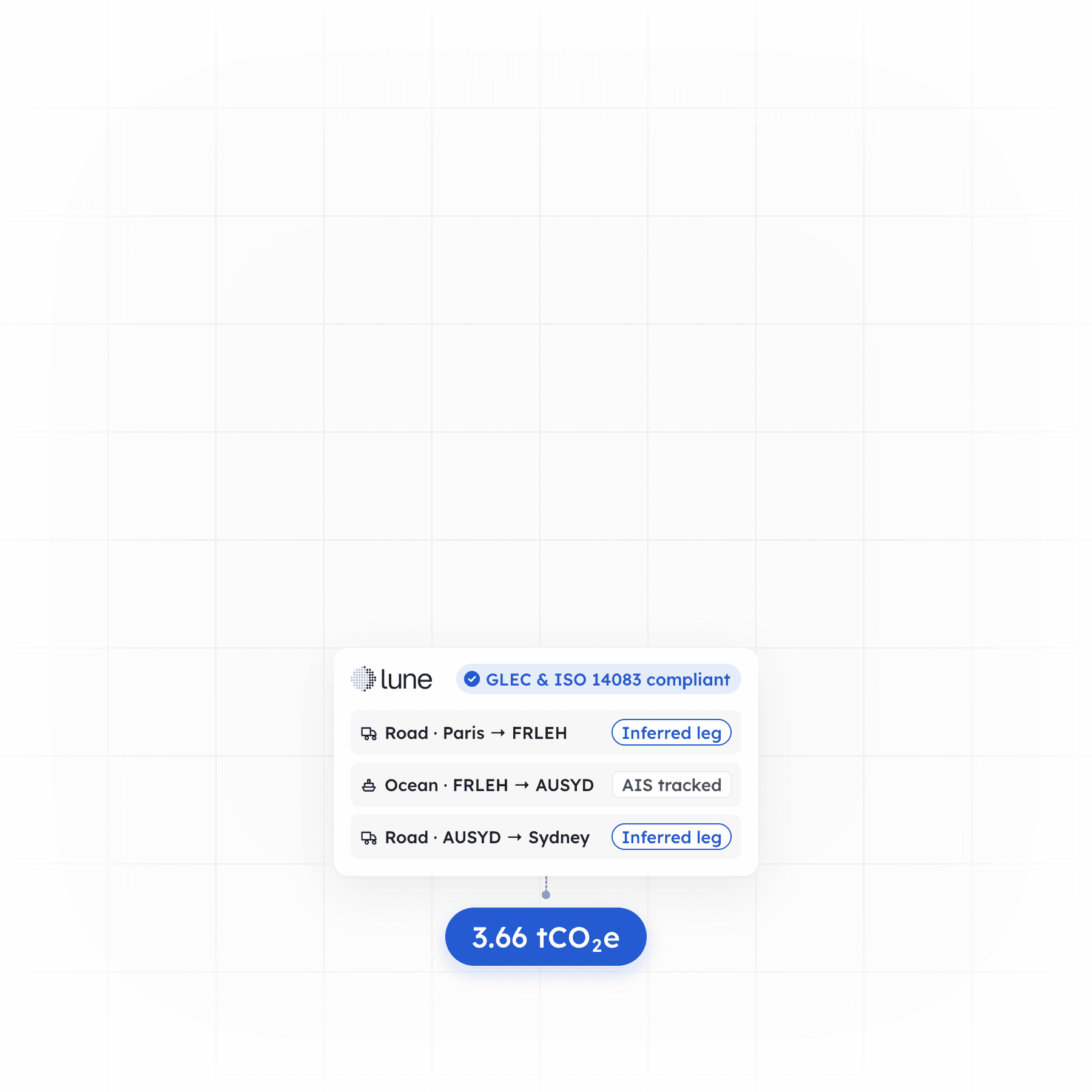
Every mode, every leg
Sea, air, road, rail, inland waterways and logistics sites in one multi-leg calculation.
Every mode, every leg
Sea, air, road, rail, inland waterways and logistics sites in one multi-leg calculation.

Modelled, not averaged
Fuel use modelled from vessel, aircraft and truck engine data wherever the data allows.
Modelled, not averaged
Fuel use modelled from vessel, aircraft and truck engine data wherever the data allows.

Audit-ready
Step-by-step explanations, sources and a data quality score for every leg.
Audit-ready
Step-by-step explanations, sources and a data quality score for every leg.

GLEC and ISO 14083 compliant
Certified by Smart Freight Centre.
GLEC and ISO 14083 compliant
Certified by Smart Freight Centre.
Industry-leading granularity, from the data you already have
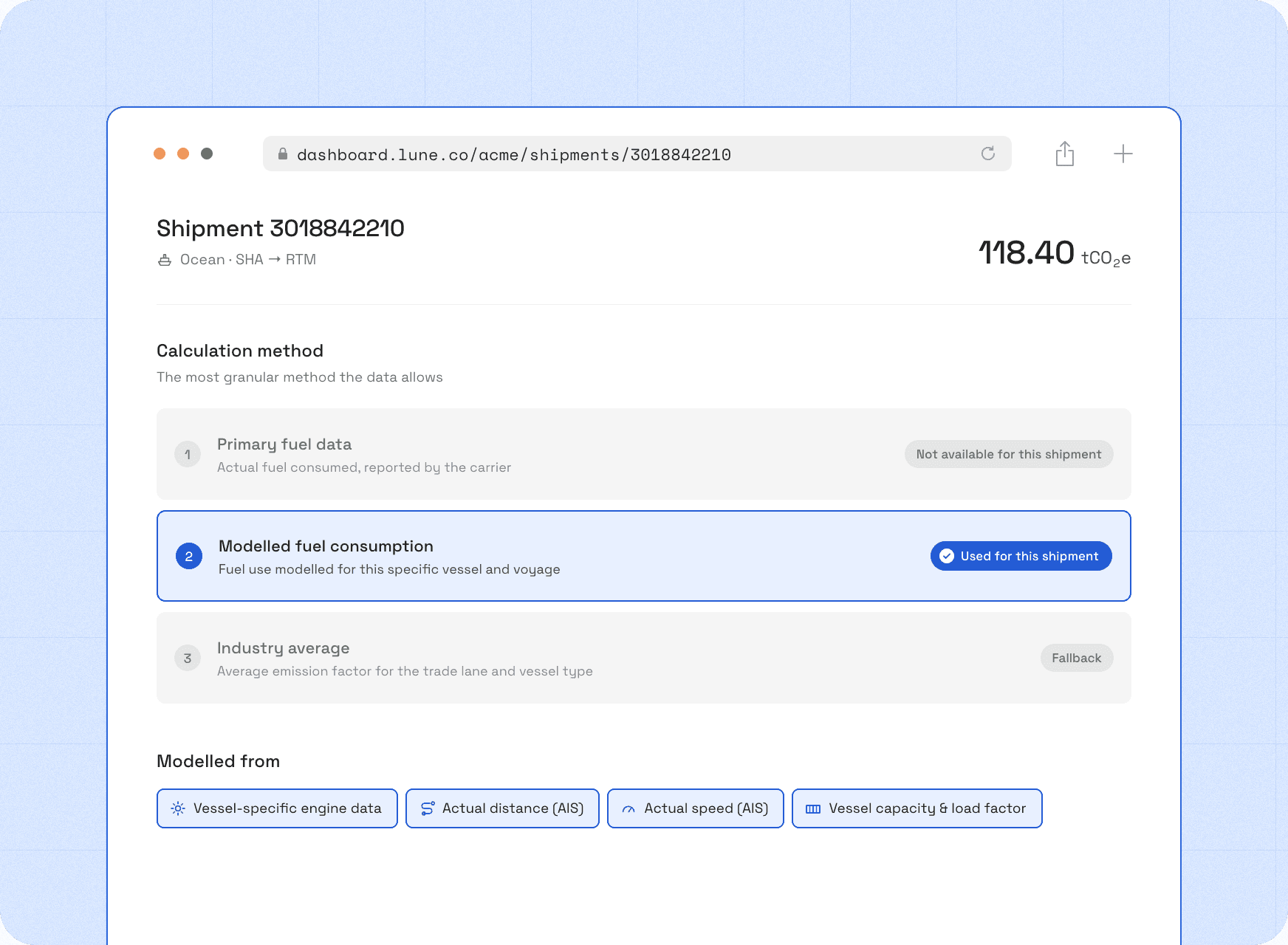
Most tools multiply distance by an industry average. Lune goes further whenever the data allows: it uses primary fuel data where available, then models fuel consumption from the specific vessel, aircraft or truck, and only falls back to industry averages when nothing better exists.
That precision matters twice. Your reporting is more accurate, and the results are granular enough to show which carriers, lanes and modes drive your emissions, so you can actually reduce them.
The same depth across every mode
Without actual routes, ocean emissions can be off by 30% or more, as the Red Sea crisis showed. That is why Lune models each mode from the vehicle, vessel or aircraft that actually moved the goods.

Sea
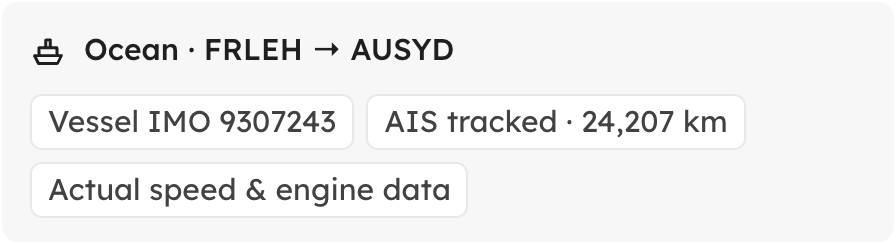
Vessel-specific emissions for around 16,000 ships, with actual distance and speed from AIS tracking.
Sea
Vessel-specific emissions for around 16,000 ships, with actual distance and speed from AIS tracking.

Air
100+ aircraft models. The flight number identifies the aircraft, its fuel efficiency and any stopovers.
Air
100+ aircraft models. The flight number identifies the aircraft, its fuel efficiency and any stopovers.

Road
50+ truck and van types, with fuel use modelled from gradient, traffic, EURO standard, load and empty runs.
Road
50+ truck and van types, with fuel use modelled from gradient, traffic, EURO standard, load and empty runs.

Rail
Diesel and electric trains, using each country's grid mix.
Rail
Diesel and electric trains, using each country's grid mix.
Emissions intelligence adds greater precision
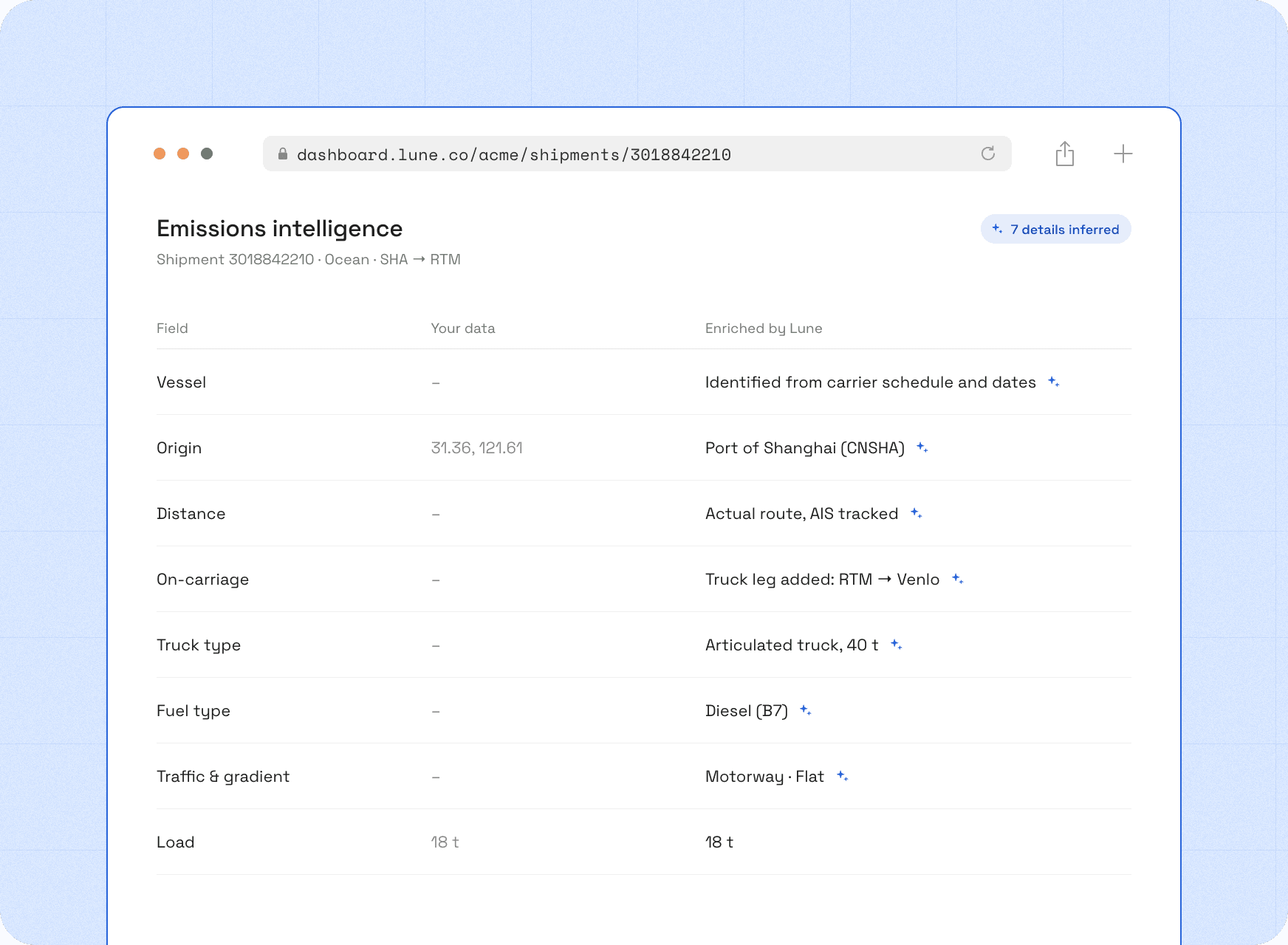
Real shipment data is rarely complete. Lune's emissions intelligence fills the gaps: it infers the vessel from carrier and dates, snaps coordinates to the right port, adds missing pre- and on-carriage truck legs, and picks the right truck type, traffic profile and gradient for the route. You get a more realistic result without asking anyone for more data.
Every number, explained step by step
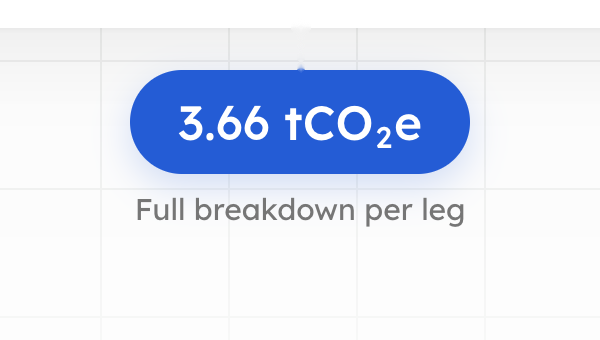
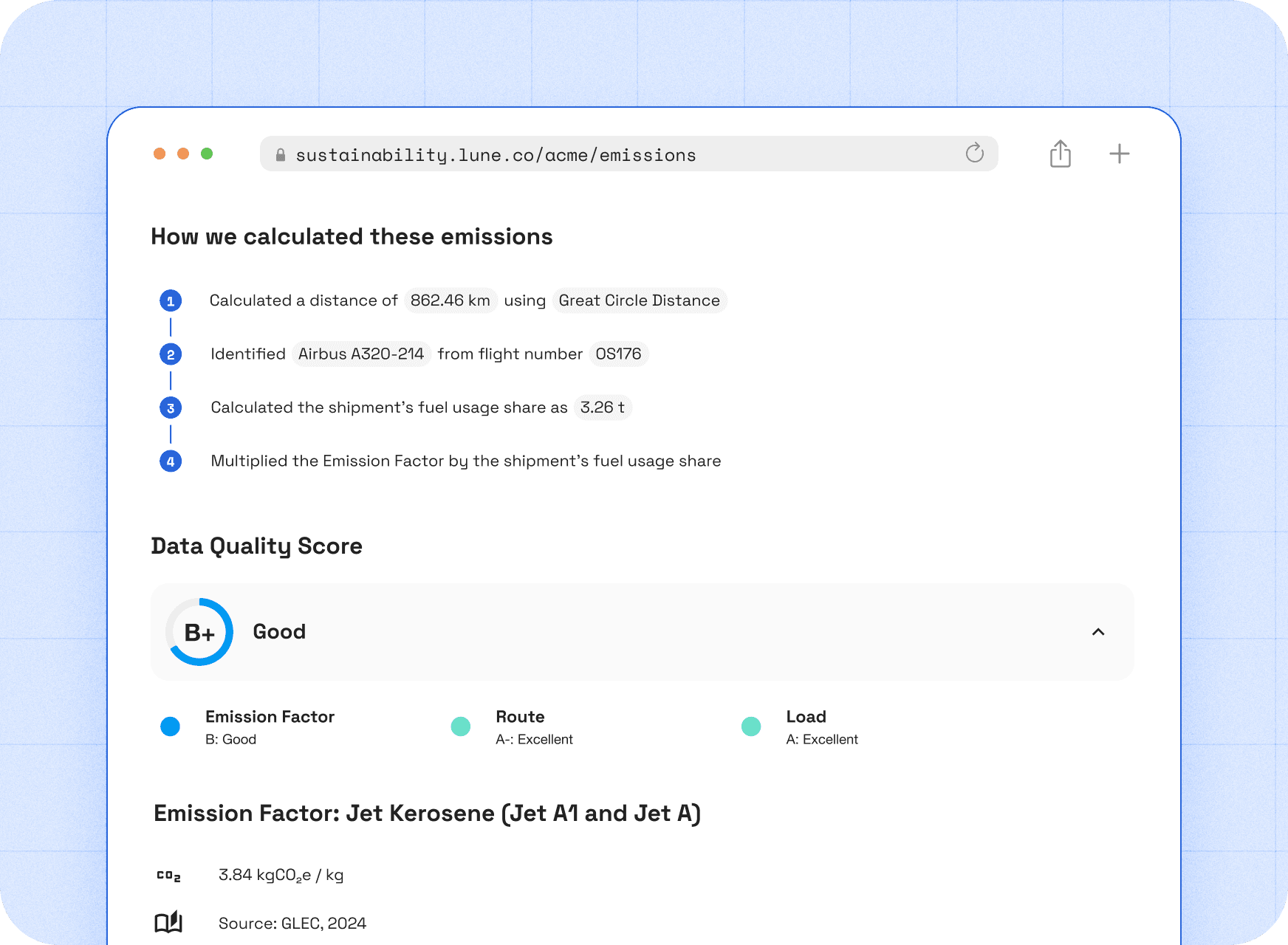
For every shipment leg, Lune shows how the emissions were calculated, which data sources and emission factors were used, and a data quality score for the emission factor, route and load. Results are broken down into well-to-tank and tank-to-wheel, and pollutants such as NOx, SOx and particulate matter can be reported alongside CO₂e. Your auditor sees exactly what you see.
Spreadsheet, API or plugin
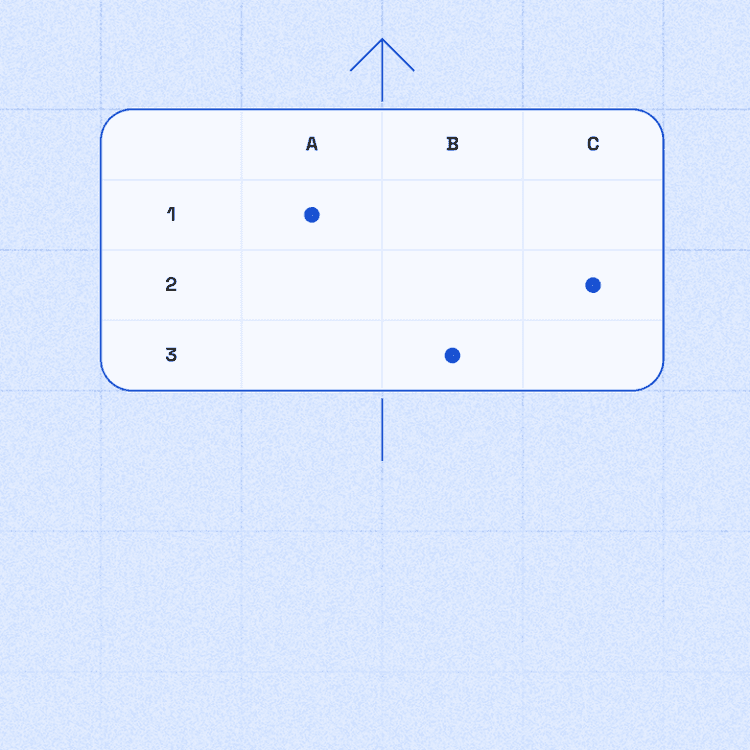
Upload a spreadsheet and get calculations back in bulk, no code required. Integrate the REST API to calculate single or multi-leg shipments in one request. Or activate the CargoWise plugin. Whichever route you choose, you can go live within days.
Simple spreadsheet upload
Get started immediately and upload your logistics data via spreadsheet.

REST API
Multi-leg shipments in one API request, integrate in days.

CargoWise plugin
Activate Lune's CargoWise plugin. No code required.




FAQs
Which standards does Lune follow?
Which standards does Lune follow?
What is the minimum data needed?
What is the minimum data needed?
Can I use my own fuel data?
Can I use my own fuel data?
Can I calculate emissions for future shipments?
Can I calculate emissions for future shipments?
How are multi-leg shipments handled?
How are multi-leg shipments handled?
How long does it take to get started?
How long does it take to get started?

See how your shipments are really calculated.